
Showing 65–80 of 116 results
-

Huperzia Phlegmaria
Read moreHuperzia phlegmaria has tiny leaves growing on forked stems which can be as long as 80 cm. The stems grow from a single point from where they hang down towards the ground. This species is an epiphyte that normally grows on trees in its natural habitat so is ideally suited to cultivation in a hanging pot.
-

Huperzia Phlegmariurus Phlegmaria
Read moreHuperzia Phlegmariurus Phlegmaria is a rare species of the commonly know tassel fern native to the islands of South-East Asia. The long, fern-like, branches are densely covered with small leaves that are resembling of a conifer branch, a truly confusing and remarkable species.
-

Huperzia Squarossa
Read moreHuperzia Squarossa
Lycopodium squarrosum is closely related to ferns and mosses. It also goes by the name rock tassel fern or club moss and is now classified into a subgenus called Huperzia. This species grows as an epiphyte. When large, these plants do best on a pedestal, or on a hanger as the foliage will droop down pendulously as it grows.
-
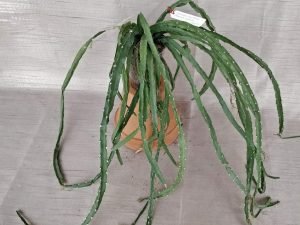
Lepsimium Cruiciforme – Hurricane Cactus
Read moreLepismium cruciforme is an epiphytic cactus with long, fleshy stems and small, white and fuzzy thorns along the stems. Great in a hanging basket. It is also commonly called ‘Hurricane Cactus’.
-
-
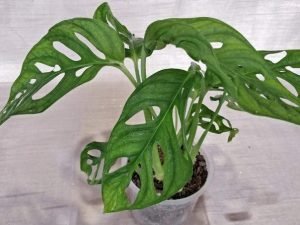
Monstera Acuminata (Large)
Read moreMonstera Acuminata is an evergreen hemiepiphytic climber, with stems long up to 20 m and more, with 5-10 cm internodes and with elegant, smooth and iridescent leaves. It is a climbing and trailing vine with elongated leaves that have holes in them.
Monstera Acuminata, or shingle plant, is a species of flowering plant from family Araceae which is widespread from Mexico to Central America. It is abundant in central Petén and extends north to San Luis Potosí, making it the northernmost of the species of Monstera.
-
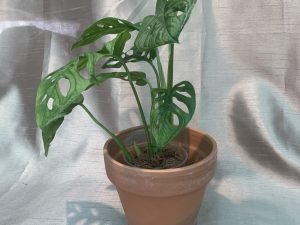
Monstera Acuminata (Small)
Read moreMonstera Acuminata is an evergreen hemiepiphytic climber, with stems long up to 20 m and more, with 5-10 cm internodes and with elegant, smooth and iridescent leaves. It is a climbing and trailing vine with elongated leaves that have holes in them.
Monstera Acuminata, or shingle plant, is a species of flowering plant from family Araceae which is widespread from Mexico to Central America. It is abundant in central Petén and extends north to San Luis Potosí, making it the northernmost of the species of Monstera.
-
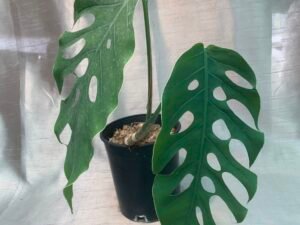
Monstera Dubia
Read moreMonstera Dubia is one of the smaller, lesser known Monstera varieties, but it’s very beautiful and makes a great addition to any Monstera lover’s houseplant collection.
You can recognize Monstera Dubia by the small, heart-shaped leaves, speckled with both light and dark green. Since juvenile plants (the kind you’ll likely see indoors) lack the iconic Monstera slits and holes, you may not even recognize it as a Monstera at first! But the gorgeous light and dark green patterned leaves make this a beautiful plant in its own right, even without the fenestration.
-
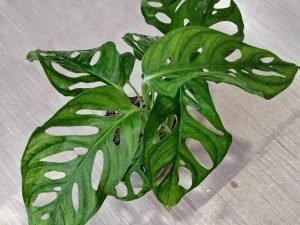
Monstera Lechleriana
Read moreThe Monstera Lechleriana is an evergreen species with interesting foliage. As the plant grows, it gives rise to big and lush leaves that frequently have holes close to its central vein. A juvenile Monstera plant may look completely different from its mature form.
-

Monstera Peru
Read more🥝🥝Monstera Peru is a very rare fast-growing plant with thick and unusually stiff leaves with wrinkled surface. The leaves are somewhat wider, and look rounder.🥝🥝
Boost the Monstera Peru growth by using a totem pol or letting it climb to a surface so it can get bigger and healthier like it does in nature.
-
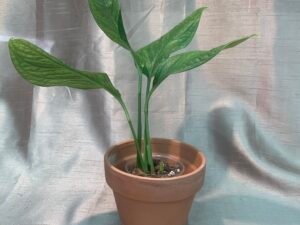
Monstera Pinnatipartita (Large)
Read moreMonstera Pinnatipartita is a rare evergreen and beautiful climbing plant originally from South America that looks similar to Monstera Deliciosa. It has divided leaves when it matures and produces white waxy flowers that along with its aerial roots, make it look wildly.
-
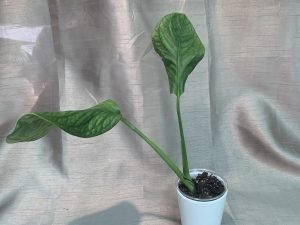
Monstera Pinnatipartita (Small)
Read moreMonstera Pinnatipartita is a rare evergreen and beautiful climbing plant originally from South America that looks similar to Monstera Deliciosa. It has divided leaves when it matures and produces white waxy flowers that along with its aerial roots, make it look wildly.
-
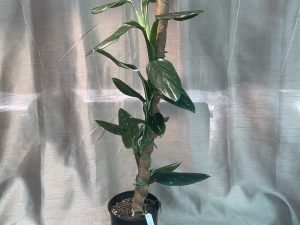
Monstera Standleyana Variegated 18 CM
Read moreDescription. Monstera Standleyana ‘Albo Variegata‘ , also incorrectly called Philodendron Cobra, is an easy going plant with small oval leaves that are speckled with white/cream variegation. It’s a climbing Monstera that will appreciate a trellis to grow on, something like the brass plant support would be perfect.
-

Monstera Standleyana Variegated 32 CM
Read moreDescription. Monstera Standleyana ‘Albo Variegata‘ , also incorrectly called Philodendron Cobra, is an easy going plant with small oval leaves that are speckled with white/cream variegation. It’s a climbing Monstera that will appreciate a trellis to grow on, something like the brass plant support would be perfect.
Hoya Elliptica
Origin in Thailand
Soil : well drained soil. Hoya hates clogged soil !!!
sun/shade : full sun to partial shade
watering : plenty BUT let it dry out between 2 watering
Hardiness : Not lower than 14° C
Height : Vine, up to 3m
Overall information : Hoya is a huge plant family. Most come from South-East Asia. Some grow very fast while others grow very slow. But most will bear amazing flowers with a gorgeous smell. -
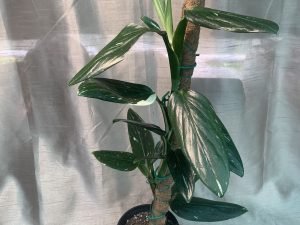
Monstera Standleyana Variegated 21 CM
Read moreDescription. Monstera Standleyana ‘Albo Variegata‘ , also incorrectly called Philodendron Cobra, is an easy going plant with small oval leaves that are speckled with white/cream variegation. It’s a climbing Monstera that will appreciate a trellis to grow on, something like the brass plant support would be perfect.
-
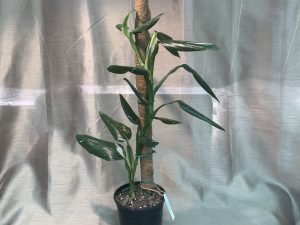
Monstera Standleyana Variegated 23.20 CM
Read moreDescription. Monstera Standleyana ‘Albo Variegata‘ , also incorrectly called Philodendron Cobra, is an easy going plant with small oval leaves that are speckled with white/cream variegation. It’s a climbing Monstera that will appreciate a trellis to grow on, something like the brass plant support would be perfect.