
Showing 81–96 of 116 results
-
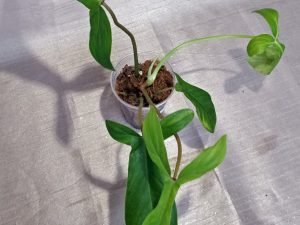
Philodendron 69686
Read morePhilodendron 69686 is a rare aroid part of the family of Araceae.
Just like most Philodendron they grow beautiful leaves in a remarkable shape. The Philodendron grow by climbing trees in nature, sprouting a new growth point at the end of each node. As the plant grows, the leaf morphs into a more hourglass shaped.
-

PHILODENDRON CREAM SPASH
Read morePHILODENDRON CREAM SPASH
Large, healthy & well rooted. Love the coloration of the leaves. Looking forward to seeing new growth on it. Really pleased with my purchase.
-
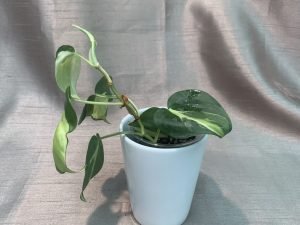
Philodendron Cream Splash (Medium)
Read moreThe Philodendron ‘Cream Splash‘ is also sometimes known as the; Sweetheart Plant, or Heart-Leaf, due to the beautiful leaf shape. It is a vining Philodendron that can grow as a climber or left trailing from a hanging basket or shelf. This variety has stunning light green, cream, and dark green variegated leaves.
-

Philodendron Cream Splash (Small)
Read moreThe Philodendron ‘Cream Splash‘ is also sometimes known as the; Sweetheart Plant, or Heart-Leaf, due to the beautiful leaf shape. It is a vining Philodendron that can grow as a climber or left trailing from a hanging basket or shelf. This variety has stunning light green, cream, and dark green variegated leaves.
-
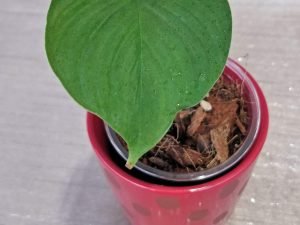
Philodendron Fibraecataphyllum
Read morePhilodendron Fibraecataphyllum aka Philodendron Peru is a gorgeous climber. They have cute velvety green leaves when in a juvenile form which completely changes into a large rippled leaf with top lobes. If you are into collecting philodendrons, this one is a must-have.
-
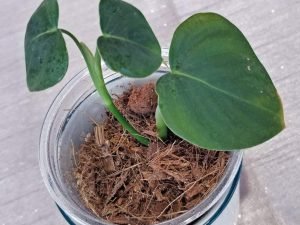
Philodendron Lupinum
Read moreLupinum is a very unusual ever-changing philodendron. It starts out in it’s juvenile state having small one to two inch leaves with velvety tops and maroon undersides, then when given a totem to climb the leaves will morph into 10 to 12 inches in size, with a glossy corrugated pattern while still holding the maroon underside. The leaves of this plant will transform into a completely different shape when mature. When juvenile, they’re small and velvety with a maroon underside, but mature ones have glossy, rippled leaves with top lobes. These are climbers, so provide it with plenty of space to climb!
-

Philodendron Micans (Large)
Read morePhilodendron Micans has iridescent, heart-shaped leaves that are velvety to the touch and almost quilted in texture. Depending on the light, the color of the foliage can look deep green or rich purple, with the new leaves emerging chartreuse, edged with pink. Vining in habit, Philodendron micans will cascade elegantly in a hanging planter, or can be trained to climb up a trellis. If you love interesting foliage, this easy to care for plant is a perfect addition to your collection.
-

Philodendron Micans (Small)
Read more🔥🔥Philodendron micans has iridescent, heart-shaped leaves that are velvety to the touch and almost quilted in texture. Depending on the light, the color of the foliage can look deep green or rich purple, with the new leaves emerging chartreuse, edged with pink. Vining in habit, Philodendron micans will cascade elegantly in a hanging planter, or can be trained to climb up a trellis. If you love interesting foliage, this easy to care for plant is a perfect addition to your collection.🔥🔥
-
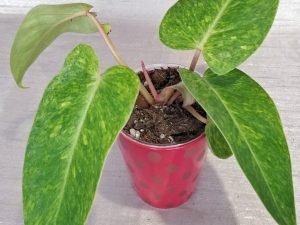
Philodendron Painted Lady
Read morePhilodendron Painted Lady Plants are a brightly colored climbing Philodendron. The new leaves are entirely yellow with small spots of color. The fleshy thick, lemon-green leaves with darker spots eventually turn mottled green on maturity. It is a striking aroid, with bright pink petioles (the stalk that joins a leaf to a stem) and chartreuse leaves.
-
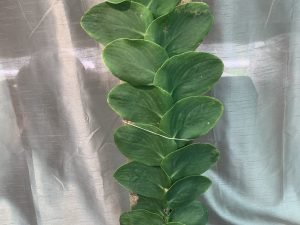
Rhaphidophora Hayi – Shingle Plants
Read moreThe Rhaphidophora Hayi aka the “shingle plant,” is a rare climbing plant that probably looks a bit different from most other vines. Unlike most other aroids, the Rhaphidophora Hayi’s ovular dark green leaves only grow to be about 5 inches long.
Origin:
 North East Queensland, Australia and New Guinea.
 -
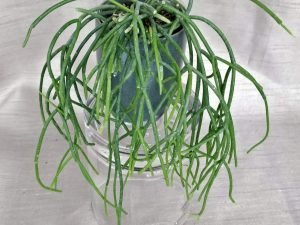
Rhipsalis Baccifera – Spaghetti Cactus
Read more🌿🌿🌿Rhipsalis Baccifera🌿🌿 (Mistletoe Cactus or Spaghetti Cactus),a tropical succulent native to rainforests in warm regions, is characterized by long thread-like stems and creamy-white flowers that give way to mistletoe-like fruits. This plant forms hanging clusters that are typically 3 feet long or greater when mature. This is by far the most commonly grown cacti in the genus.🌿🌿
This plant is found in Florida, Mexico, and Brazil. Surprisingly, growing Rhipsalis requires shade to partial shade. While most cacti are found in hot, sunny, arid zones, mistletoe cactus is unique in its requirements for moisture and dim light. Take some tips on how to grow mistletoe cactus and enjoy this unique and entertaining looking plant.
-

Rhipsalis Baccifera Horrida Rat Tail (Large)
Read moreRhipsalis Baccifera s. Horrida (native to Madagascar) , also known as Rat Tail or Mouse Tail Cactus, is a sub tropical trailing plant with hairy stems that start upright then spill over making it the perfect hanging plant to dangle over a shelf or plant into a hanging planter.
It is an epiphytic cactus, meaning it likes to grow onto a plant or tree but not in a harmful or parasitic way.
It has foliage that appears on branching stems about 5-7mm in diameter, tapering to a point. Just like a mouse’s tail! It is a great plant for displaying in a hanging basket because the plant can grow quite long. It will therefore drape far out of the pot. Water freely when in growth, but keep dryer in winter. Mist the leaves regularly with water to increase humidity and make sure the winter temperatures stay above 10°C.
-

Rhipsalis Baccifera Horrida Rat Tail (Small)
Read moreRhipsalis Baccifera s. Horrida (native to Madagascar) , also known as Rat Tail or Mouse Tail Cactus, is a sub tropical trailing plant with hairy stems that start upright then spill over making it the perfect hanging plant to dangle over a shelf or plant into a hanging planter.
It is an epiphytic cactus, meaning it likes to grow onto a plant or tree but not in a harmful or parasitic way.
It has foliage that appears on branching stems about 5-7mm in diameter, tapering to a point. Just like a mouse’s tail! It is a great plant for displaying in a hanging basket because the plant can grow quite long. It will therefore drape far out of the pot. Water freely when in growth, but keep dryer in winter. Mist the leaves regularly with water to increase humidity and make sure the winter temperatures stay above 10°C.
-
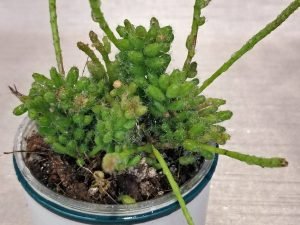
Rhipsalis Mesembryantnemoides
Read more🌿🌿Rhipsalis Mesembryanthemoides is an epiphytic plant with strong stems covered by tiny branchlets. Initially this plant grows erect, later it is pendent, branching free. The main branches are elongated, cylindrical and woody, up to 20 cm long and 1 to 2 mm in diameter. The white flowers appear at areoles of the branchlets. The berries which adorn the leafy segmented stems are white and almost transparent.🌿
This plant is commonly called ‘Clumpy Mistletoe Cactus’🌿🌿
-

Rhipsalis Oblonga
Read moreRhipsalis Oblonga is an epiphytic cactus with olive green or light green, semi-erect to pendent, up to 8.2 feet (2.5 m) long segmented stems. The main stems are up to 8 inches (20 cm) long, up to 0.4 inches (2 cm) across, cylindrical at the base, becoming flattened above and branching apical or lateral. The stem segments are up to 6 inches (15 cm) long, up to 2.4 inches (6 cm) wide, with serrated margins and large areoles. Flowers are yellowish-white and appear during the rainy season. Fruits are spherical, up to 0.3 inches (0.7 cm) in diameter, translucent, greenish to nearly white at maturity.
-
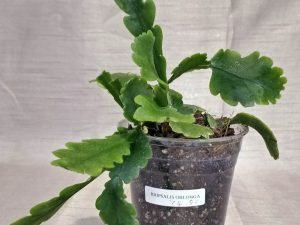
Rhipsalis Oblonga
Read moreRhipsalis Oblonga is an epiphyte which reaching 2.50 m long, branching apical or lateral. Stem segments flattened to rarely triangular in longitudinal section, 0.5-0.8 mm diameter, olive-green or light green, slightly succulent, monomorphic, 8-15 cm long.
The flowers are borne along the sides of the branches, solitary at the areoles. The fruit is globular to short-oblong, 3 to 4 mm long, nearly white, naked, crowned by the withered perianth.